

Mays’s Heart

Mays’s Heart

A story you can hear, see and feel.

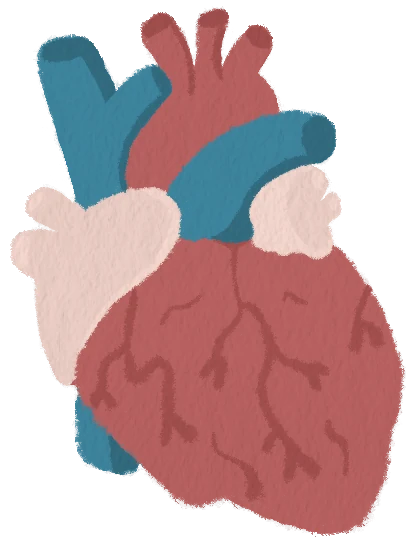
Hand-drawn heart from Mays’s Heart

Sound design sample · Bushra Alhejaili · best with headphones

THE STORY

Mays’s Heart

A story told through a heartbeat.

We meet people every day without knowing what might be happening beneath the surface. Someone could be standing right in front of us, laughing, talking, and enjoying life, while living with a serious heart condition, and we would hardly notice.

A child, full of life, playing, laughing, discovering the world, and finding joy in the simplest things. It would rarely cross our minds that beneath all that energy and happiness, their little heart might be struggling to do something we so often take for granted.

This is where the story begins.

My little sister, Mays, lived with dilated cardiomyopathy, a condition that affects the heart’s ability to pump blood effectively. Yet, looking at her, you would hardly have known. She was like any other child, full of curiosity, joy, and endless inspiration. Her condition was part of her life, but it never defined who she was.

After she passed away, I began looking for a way to keep her memory alive, something that could carry a little piece of her story into the world. With my love for science, illustration, music, and technology,

I found myself drawn to the idea of bringing these interests together to tell a story inspired by her heart.

That’s how Mays’s Heart came to life.

Rather than explaining dilated cardiomyopathy through medical terminology, the project approaches the condition through the perspective of the heart itself. What if the heart could tell its own story? What would it say about the challenges it faces, the rhythm it tries to maintain, and the work it does every moment of our lives?

These questions shaped a little illustrated character with a story of its own,

inviting players into a world where the human heart is no longer just an organ described in textbooks, but something they can connect with.

The player takes on the role of a pacemaker, helping the heart maintain its rhythm as the story unfolds. Rather than simply observing, players become active participants, listening to the heartbeat, recognizing its rhythm, and responding through interaction. The gameplay transforms something as familiar as a heartbeat into something that requires attention, introducing players to the idea that even the smallest, most natural functions of our bodies can be incredibly complex.

Sound plays an equally important role in bringing this experience to life. The original music creates the atmosphere surrounding the story, while the carefully designed heartbeat sounds become part of the interaction itself. Changes in rhythm and timing encourage players to listen closely, making sound both a storytelling element and a guide throughout the experience.

But a heartbeat isn’t only something we hear. It’s something we feel.

Through haptic feedback, the heartbeat is translated into vibrations that players can physically experience through their devices. Each beat becomes a tactile sensation,

connecting what happens on the screen to something felt in the player’s hand. By combining audio, visuals, and touch, the experience extends beyond traditional storytelling, allowing players to engage with the little heart through multiple senses.

The hand-drawn illustrations tie these elements together, creating a gentle, imaginative world that makes a complex medical subject feel approachable. Rather than focusing on the frightening aspects of the condition, the experience encourages curiosity, empathy, and a deeper understanding of the stories that often remain invisible to us.

At its heart,

the project is about looking beyond what we see. About recognizing that someone can be full of laughter, energy, and life while carrying a condition we know nothing about. It’s an invitation to become more curious about the human heart and more aware of the experiences of those around us.

And for me, it will always be something more personal. A way of keeping a little piece of my sister’s memory alive, allowing her story to continue reaching people through something created with love, curiosity, and everything she inspired in me.

1 of 7
THE GAME

Becoming the pacemaker

The opening of Mays’s Heart. The player meets Mays’s heart, taps along with its heartbeat to help it find a steady rhythm, then draws the connection that brings the pulses together.

Recorded from the app, with its own music and sound. Turn your sound on.

HEARD

Lub-dub, and lub-dub-dum

The heartbeat is the story’s main character. It is what the player listens to, follows and answers. I made the sound in Ableton Live, using the Vital synth plug-in.

Switch between them while it plays, and listen for the third sound.

A healthy heart
lubdub

Two soft sounds in every beat, as the heart’s valves close. A steady rhythm we rarely stop to notice.

The dilated heart
lubdubdum

As the heart grows larger, it can add a third, low sound after the second, called a gallop. That third sound is what you hear in every beat of the dilated heart.

Same pace. One extra sound. That is the condition you hear.

HEARD

Leaving room for the heart

I composed the soundtrack to hold the atmosphere of the story, while leaving room for the heartbeat to stay meaningful.

Musicsoundtrack
Heartbeatthe heart
Dilatedthe heart

The music lives above 120 Hz. The heart lives below 250 Hz. They share the space without covering each other.

Layered here so you can hear them together. This isn’t a recording of the in-game mix.

SEEN

The sound draws the picture

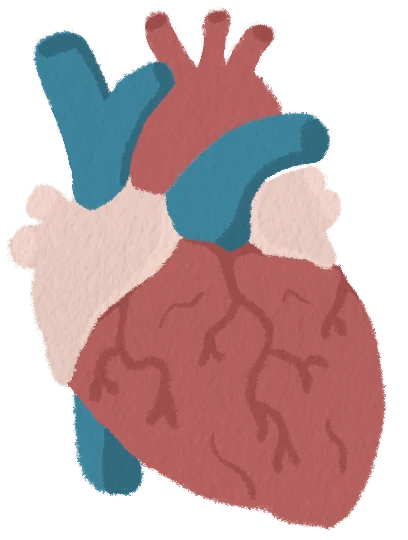
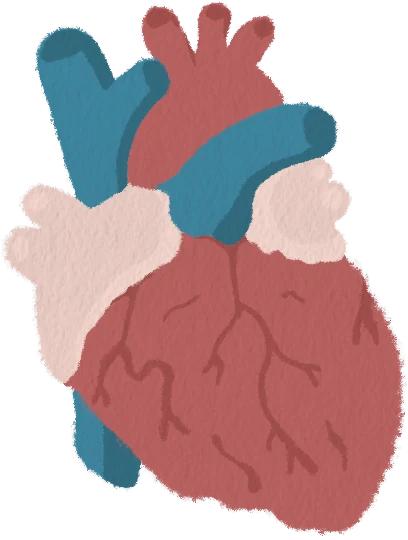
Every illustration was drawn by hand in Procreate, on a background made to feel like a sketchbook page. Then the drawings were given a pulse.

Heart, frame 1

The three hand-drawn frames loop without stopping, one full cycle per heartbeat. Press play and each cycle locks to the dilated heartbeat, so picture and sound share one clock.

FELT

Bringing the rhythm into the hands

With Apple’s Core Haptics, the heartbeat becomes something the player feels through the device: a physical link between their tap and the heart’s rhythm.

Heart

Tap the heart

In the app this is a Core Haptics pattern on iPhone. A browser can’t play one, so here you hear the thump instead.

Not every feeling can be put into words.

Mays’s Heart was my way of giving one a rhythm: something to hear, see and feel. It reminded me why I create: to give form to things that are hard to express through words alone.

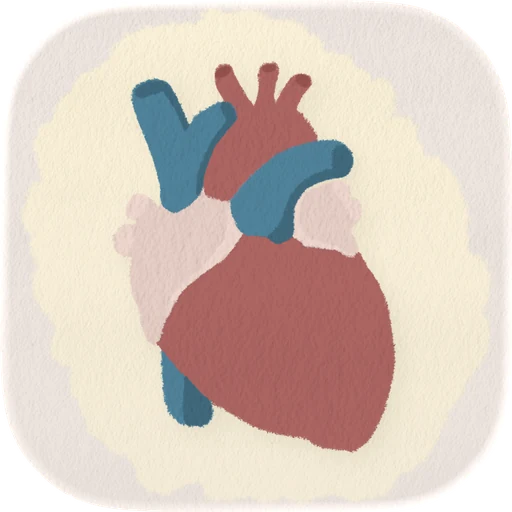
Mays’s Heart app icon

Bushra Alhejaili

Concept, illustration, music composition, sound design, haptic design and development

Ableton Live · Vital · Procreate · Swift · SwiftUI · AVFoundation · Core Haptics